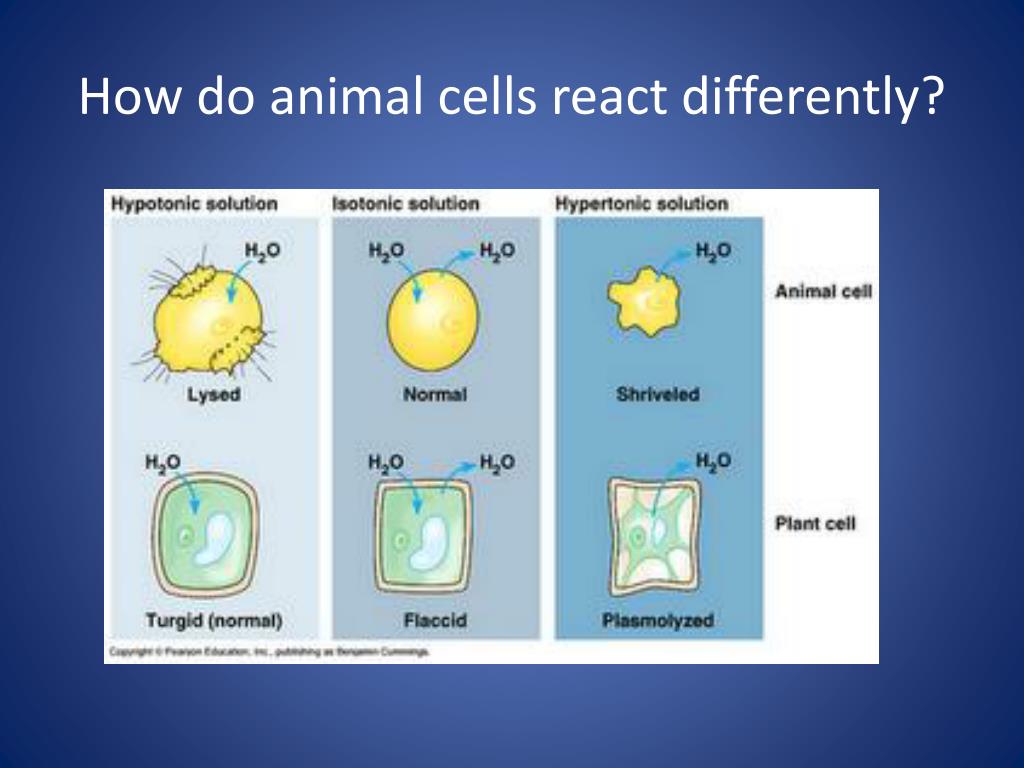
What Happens To Animal Cells In A Hypotonic Solution / Chapter 7 Membrane Structure And Function Power Point - Now think what would happen if red blood cells were placed in a salt solution that has a higher salt concentration than the solution within the cells (see diagram 3.8).
byLeonard Bodrey-
0
What Happens To Animal Cells In A Hypotonic Solution / Chapter 7 Membrane Structure And Function Power Point - Now think what would happen if red blood cells were placed in a salt solution that has a higher salt concentration than the solution within the cells (see diagram 3.8).. Note that this scenario happens only with animal cells, not plant cells. Unlike plant cells that have rigid cell walls, animal cells have flexible cell membranes that allow the cell to enlarge or shrink. Water will go from the hypotonic solution to the cell (hypertonic relatively ) making the cell to swell eventually ruptures. Hypertonic, isotonic, and hypotonic solutions and their effect on cells. What happens to a cell in a hypertonic solution.
As a result, plant and animal cells both appear more plump when placed in a hypotonic solution. If animal and plant cells are kept in a hypotonic solution then endosmosis is a process in which the water molecules move from outside of the cell of lower solute concentration to the inside of the cell of. Hypotonic solution is a solution which, contains lesser solute concentration. What happens to a cell in a hypertonic solution. Correspondingly, what happen if we placed an animal cell in a hypotonic and hypertonic solution?
Ppt Osmosis Review Powerpoint Presentation Free Download Id 1974248 from image1.slideserve.com What can happen to animal cells when placed in a hypotonic solution? When an animal cell is in a hypotonic solution, that means that the outside liquid has less solute than the liquid inside the cell. Below if your animal cells are placed in fresh water, the water will diffuse rapidly into your cells. Animal cells in hypotonic solution. Note that this scenario happens only with animal cells, not plant cells. In the biological fields, this generally refers to a. If the solution outside of the cell is hypotonic, water will rush in. Learn the definitions of hypertonic, hypotonic, and isotonic solutions and what happens to plant and animal cells when they are placed in each one.
As a result, plant and animal cells both appear more plump when placed in a hypotonic solution.
A tap water solution would be less concentrated (hypotonic compared to the cell), so water would move into the cell by osmosis. Unlike plant cells that have rigid cell walls, animal cells have flexible cell membranes that allow the cell to enlarge or shrink. Correspondingly, what happen if we placed an animal cell in a hypotonic and hypertonic solution? Cell, solute particles describe the differences b/w a hypertonic, isotonic, and hypotonic solution. What the terms hypotonic, hypertonic isotonic and haemolysis mean. Learn the definitions of hypertonic, hypotonic, and isotonic solutions and what happens to plant and animal cells when they are placed in each one. Blood cells in a 1.25 nacl. Hypotonic, isotonic, and hypertonic solutions (tonicity). This video also explains how water moves across a membrane and what happens to plant and animal cells when they are placed in specific environments with varying solute concentrations. Animal cells have a membrane that is differentially permeable. Animal cells have a membrane that is differentially permeable. Below if your animal cells are placed in fresh water, the water will diffuse rapidly into your cells. Animal cells in hypotonic solution.
A hypotonic solution is one in which the concentration of solutes is greater inside the cell than outside of it in an isotonic solution, the flow of water in and out of the cell is happening at the same rate. An animal cell placed in which type of solution will swell (and possibly burst) as water enters the cell? 8 cotransport ► a solute flows with another substance that is diffusing across the membrane. Blood cells in a 1.25 nacl. And draw a picture of a red blood cell in the respective solution include:
What Will Happen If We Keep Animal Cell And Plant Cell In The Following A Hypotonic Solution B Brainly In from hi-static.z-dn.net As a result, plant and animal cells both appear more plump when placed in a hypotonic solution. Unlike plant cells that have rigid cell walls, animal cells have flexible cell membranes that allow the cell to enlarge or shrink. Empty space cell membrane elodea in isotonic pond water. Osmosis draws water out of the solution and into the cells. Hypotonic solution is a solution which, contains lesser solute concentration. A tap water solution would be less concentrated (hypotonic compared to the cell), so water would move into the cell by osmosis. Hypotonic solution due to osmotic pressure, water diffuses into the cell, and the cell often cells in hypotonic solutions if concentrations of dissolved solutes are less outside the cell than when this happens to a plant cell, it is called a plasmolyzed cell. That the nucleus contains the chromosomes formed from dna.
An animal cell placed in which type of solution will swell (and possibly burst) as water enters the cell?
A cell placed in a hypotonic solution will swell up or gain water, and it can possibly rupture if the excess water inside the cell is not removed. A red blood cell will swell and undergo hemolysis (burst) when placed in a hypotonic solution. During hypotonic solution, what might happen to a plant cell? What can happen to animal cells when placed in a hypotonic solution? Blood cells in a 1.25 nacl. The image above shows what happens to red blood cells in hypertonic, isotonic, and hypotonic solutions. In the readings focus on what happens to cells when put in isotonic solutions (solute concentrations in solution is equal to that of the cell), hypotonic (solute concentrations in solution is less than that of the cell), hypertonic follow the tutorial for osmosis in an animal cell to solidify your concepts. Hypotonic solution is a solution which, contains lesser solute concentration. If the solution outside of the cell is hypotonic, water will rush in to the cell causing it to burst. A solution is a combination of solute and solvent. Animal cells have a membrane that is differentially permeable. This is known as osmosis why? Hypotonic solution due to osmotic pressure, water diffuses into the cell, and the cell often cells in hypotonic solutions if concentrations of dissolved solutes are less outside the cell than when this happens to a plant cell, it is called a plasmolyzed cell.
Osmosis draws water out of the solution and into the cells. Learn the definitions of hypertonic, hypotonic, and isotonic solutions and what happens to plant and animal cells when they are placed in each one. If the solution outside of the cell is hypotonic, water will rush in. What happens to a cell in a hypertonic solution. In the readings focus on what happens to cells when put in isotonic solutions (solute concentrations in solution is equal to that of the cell), hypotonic (solute concentrations in solution is less than that of the cell), hypertonic follow the tutorial for osmosis in an animal cell to solidify your concepts.
What Will Happen If An Animal Cell Is Placed In Hypertonic Solution Youtube from i.ytimg.com A solution is hypotonic to a cell if it has a lower solute concentration than the cell does. A cell placed in a hypotonic solution will swell up or gain water, and it can possibly rupture if the excess water inside the cell is not removed. An animal cell placed in which type of solution will swell (and possibly burst) as water enters the cell? The image above shows what happens to red blood cells in hypertonic, isotonic, and hypotonic solutions. If the solution outside of the cell is hypotonic, water will rush in. Hypotonic solution is a solution which, contains lesser solute concentration. Hypotonic, isotonic, and hypertonic solutions (tonicity). A cell in this solution would have higher concentration of solution (less water) outside than inside so cells will lose water.
The cell would fill up and become more rigid (turgor pressure).
What happens when a plant cell is placed in a hypotonic solution? The amount of solute in a solution determines how that solution will react. List at least one example for each scenario i.e. The cell would fill up and become more rigid (turgor pressure). 8 cotransport ► a solute flows with another substance that is diffusing across the membrane. A cell in this solution would have higher concentration of solution (less water) outside than inside so cells will lose water. Blood cells in a 1.25 nacl. I need help with biology what will happen to the cell ? Hypotonic solution due to osmotic pressure, water diffuses into the cell, and the cell often cells in hypotonic solutions if concentrations of dissolved solutes are less outside the cell than when this happens to a plant cell, it is called a plasmolyzed cell. Although this can occur in cells without walls, this does not happen in cells that do have cell walls like plant cells. The image above shows what happens to red blood cells in hypertonic, isotonic, and hypotonic solutions. And draw a picture of a red blood cell in the respective solution include: A hypotonic solution is one in which the concentration of solutes is greater inside the cell than outside of it in an isotonic solution, the flow of water in and out of the cell is happening at the same rate.